Go!Durban: The Bus That Took 16 Years To Arrive

Durban’s Go!Durban bus rapid transit will finally launch in December, 16 years late and R10 billion spent. Starting with the C3 corridor, the city trails Johannesburg’s Rea Vaya, Cape Town’s MyCiTi and African peers like Lagos, Dar es Salaam, Accra, Dakar and Addis Ababa.

By CHRIS MAKHAYE
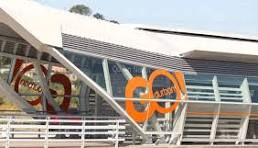
PINETOWN — The station on Josiah Gumede Road was supposed to be the future. Now its glass is gone, its red paint is peeling to pink, the electronic boards have never lit up, and weeds are cracking the dedicated lane.
For taxi commuters waiting opposite the Checkers, it has been a shelter from the rain and a joke for 16 years. Go!Durban. The buses that never came.
Pinetown’s Ghost Infrastructure
Pinetown is where the decay shows most. This was meant to be the western anchor of Durban's 2010 World Cup legacy BRT. The lanes were painted, the kerbs raised for low-floor buses, the stations built. Then nothing moved. Copper was stripped. Doors jammed. Security was hired to guard empty buildings while the infrastructure itself started to dissipate — vandalised, weathered, falling apart before it ever carried a single passenger.
On Sunday at the ICC in Durban, Mayor Cyril Xaba finally said that will end.

A December Launch Date
Flanked by KZN Transport MEC Siboniso Duma, City Manager Musa Mbhele, eThekwini Transport Authority boss Neli Zama who heads Go!Durban, bus operator Vickesh Maharaj and Santaco chair Mathula Mkhize, Xaba declared that the project will be launched in December and will be rolled out incrementally.
"The service will go live in December this year and will be launched incrementally, beginning with the C3 corridor," Xaba said.
The C3 runs from Bridge City in Inanda, through KwaMashu, Phoenix and Verulam in the north, to Pinetown in the west. It was chosen because the infrastructure, however battered, is most complete.
R10 Billion and 16 Years Later
"While the implementation of the programme has suffered delays, it has delivered tangible results in the form of infrastructure, systems and economic empowerment outcomes," Xaba told the hall of operators, officials and councillors. "The priority now is to translate the investment already made into a functioning public transport service."
The numbers explain the urgency. Close to R10 billion spent over 16 years. A 2010 legacy project that became Johannesburg's Rea Vaya and Cape Town's MyCiTi — but in Durban became a ghost network costing millions just to protect.
Durban Behind Africa’s BRT Leaders
Durban is not only behind its South African peers, but also lags many African cities that have rolled out BRT or light rail systems:
Johannesburg — Rea Vaya, ~44 km, launched 2009
Cape Town — MyCiTi, ~31 km, launched 2010
Pretoria — A Re Yeng, ~14 km, launched 2014
Lagos — BRT Lite, multiple corridors, launched 2008
Dar es Salaam — DART, 20.9 km Phase 1, launched 2016
Accra — Aayalolo, ~22 km, launched 2016
Dakar — TER/BRT, 36 km, launched 2021
Addis Ababa — Light Rail, 31 km, launched 2015
Durban’s Go!Durban has yet to carry a single passenger, while these systems already move tens of thousands daily.
Politics, Not Engineering
The head of Go!Durban, ETA's Neli Zama, was blunt about Pinetown and the rest of C3: the infrastructure cannot be left to dissipate any longer. It must be put to use. This corridor, she said, will provide the first operational component of the city's integrated public transport network.
City Manager Musa Mbhele said the question that haunted the city from the national Ministry — where are the buses? — has finally been answered.
"We have agreed to procure 22 buses, while public transport operators will purchase feeder vehicles through the Vehicle Operating Company," Xaba explained. "75% of the employees will be sourced from people displaced by the project."
The blockage was never engineering. It was politics. Taxi operators who carry 70% of Durban feared erasure. Negotiations over compensation, fleet ownership and VOCs collapsed for years. The national grant that funds BRTs wobbled. In January, Parliament's Portfolio Committee stood at empty stations like the one in Pinetown and warned the city: this must not become waste. Chair Donald Selamolela said the project was 85% ready but stuck.
Taxi Industry Now On Board
On Sunday, the industries that stalled it said they were now inside.
Santaco chair Mathula Mkhize, whose associations can shut this city down, said: "I want to stand firm that we have come across a City which now has an ear to listen to Santaco." His condition: it must benefit commuters.
Bus boss Vickesh Maharaj added: "As the bus industry, we support the City in the launch of C3 and look forward to the launch of the other phases."
The deal: city buys 22 trunk buses. Operators buy feeders through VOCs. Three-year stop-gap contract, then 12-year negotiated contract. Compensation based on business value — profits, licence time left — and rolled out incrementally as other phases are finalised.
A Date, At Last
On Monday morning in Pinetown, the station on Josiah Gumede still had no glass. But for the first time since before 2010, there is a date, a number of buses, and a plan for incremental rollout — before it falls apart completely. TQ


Comments