DA’s ‘War Council’ Leadership
- Culture Soul
- Apr 12
- 3 min read

By MBULELO BALOYI
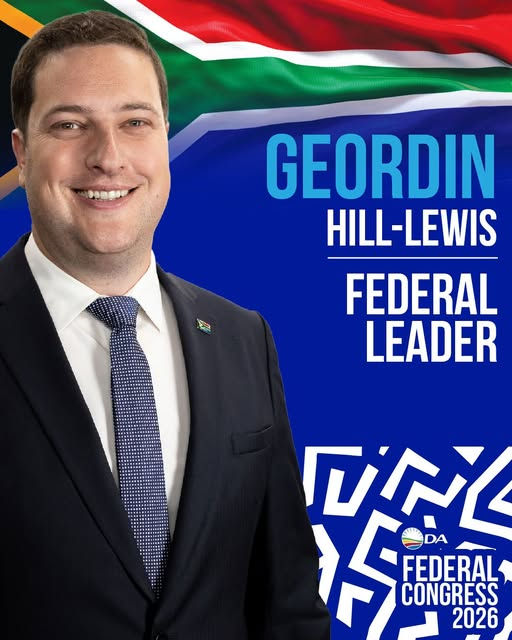
The recently elected leadership of the Democratic Alliance (DA) has drawn both intrigue and criticism, not only for its strategic posture ahead of the 2026 local government elections, but also for what its composition reveals about the party’s enduring identity crisis.
A “War Council” for Coalition Politics
At first glance, the DA’s top structure appears less like a conventional party leadership and more akin to a tightly assembled “war council” — a compact, battle-ready formation tasked with navigating an increasingly fragmented and volatile political landscape. With South Africa’s era of dominant-party rule fading, coalition politics has become the new terrain, and the DA is clearly preparing itself for high-stakes engagements.
Demographics and the Irish Coffee Metaphor
But beyond strategy, it is the demographics of this leadership cohort that have sparked renewed debate. The new leadership echelon comprises nine males and one female. There are five Caucasian males, three Africans including the sole female, one Coloured, and one Muslim leader. Critics argue that this configuration reflects a familiar pattern — one that can be likened to the layered composition of an Irish coffee: a dominant white layer on top, with a thin sprinkling of black representation beneath. While the metaphor may be provocative, it captures a perception that continues to haunt the DA — that of a party struggling to convincingly embody the diversity of the electorate it seeks to govern.

From Steenhuisen to the Multi-Party Charter
Under the stewardship of the erstwhile leader John Steenhuisen, the DA attempted to reposition itself as a credible anchor of coalition governance, particularly through initiatives like the Multi-Party Charter. The new leadership lineup appears designed to consolidate internal discipline, sharpen electoral messaging, and project unity in the face of both internal dissent and external competition.
Risks of Representation and Perception
However, this “macho war council” image and approach carry risks. On the one hand, a smaller, cohesive leadership group can enhance decisiveness and strategic clarity. In a political environment marked by shifting alliances and razor-thin majorities, such agility is an asset. On the other hand, the optics of representation matter profoundly in South Africa’s socio-political context. A leadership structure perceived as unbalanced risks alienating key voter blocs, particularly black South Africans who remain central to any viable national electoral strategy.
The DA has long wrestled with this contradiction: presenting itself as a non-racial alternative while being persistently viewed through the lens of race and privilege. Efforts to diversify leadership in the past — including the rise of figures like Mmusi Maimane — signalled a potential shift, but those gains have proven difficult to sustain.
Now, as the party braces for the next electoral cycle, its latest leadership configuration suggests a recalibration — one that prioritises control, experience, and ideological coherence, even at the cost of broader representational balance. Whether this “war council” will prove effective remains to be seen.
It may well succeed in consolidating the DA’s base and strengthening its hand in coalition negotiations. Yet, if the party is to break beyond its traditional support and position itself as a truly national alternative, it will need to confront — more decisively than ever — the question of who leads, and who is seen to lead. In South African politics, perception is not merely cosmetic; it is consequential. TQ


Comments