South Africa’s Sporting Story: Triumphs, Trials, and Transformation
- Culture Soul
- Apr 27
- 5 min read

By LINDA XIMBA
South Africa’s sporting journey since the end of apartheid in 1994 has been defined by symbolic triumphs, global competitiveness, and persistent challenges around transformation and consistency.
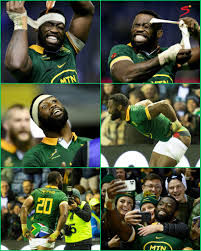
The country has often punched above its weight on the international stage across multiple codes, while using sport as a powerful tool for nation-building and social cohesion. This vision was most powerfully embodied by Nelson Mandela, South Africa’s first democratically elected president, who demonstrated to the world that sport can unite a divided nation and inspire collective identity.

Rugby Glory and National Unity
The Early Years: Sport as Nation-Building (1994–2023)The first years of democracy under Madiba saw sport used deliberately to unify a divided nation. Captains like Siya Kolisi symbolized transformation and inclusivity, hence the Springboks are widely regarded as one of the greatest rugby nations ever.
1995 – Rugby World Cup win by South Africa national rugby union team became a defining moment of reconciliation, winning 15–12 against New Zealand on home soil.2007 – Defeated England 15–6 in the final in France.2019 – Defeated England 32–12 in Japan.2023 – Defeated New Zealand 12–11 in France.
Football’s Peaks and Struggles
Arguably the most popular and influential sporting code in the country, football in South Africa has experienced peaks, decline, and untapped potential over the years.
In 1995, Orlando Pirates made history by becoming the first club from Southern Africa to win the CAF Champions League, thanks to a decisive strike from Jerry Sikhosana against ASEC Mimosas in Abidjan. That triumph signalled South Africa’s powerful re-entry into continental football.
The following year, South Africa national football team reached the pinnacle of African football by winning the 1996 Africa Cup of Nations on home soil, cementing their return to international competition. They nearly repeated the feat in the 1998 Africa Cup of Nations, finishing as runners-up. South Africa also made its 1998 FIFA World Cup debut the same year, followed by another appearance at the 2002 FIFA World Cup, though both campaigns ended in the group stages.
A historic milestone came with the hosting of the 2010 FIFA World Cup—the first ever on African soil. While the tournament was widely praised for its organisation and legacy infrastructure, the national team’s early exit reflected ongoing struggles on the field.
In the aftermath of the 2010 FIFA World Cup, South African football witnessed a new wave of black excellence on the coaching front, led by Pitso Mosimane. He transformed Mamelodi Sundowns into continental giants, guiding them to CAF Champions League glory in 2016 and establishing a dominant footballing identity.
His success opened doors beyond South Africa when he joined African powerhouse Al Ahly, becoming one of the first South African coaches to work at an elite club in North Africa and the Arab world. There, he cemented his legacy by winning two CAF Champions League titles and securing a historic bronze medal at the FIFA Club World Cup.
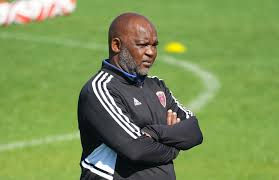
Mosimane’s achievements elevated the global standing of South African coaching, leading to opportunities across the Middle East, including stints in Saudi Arabia and the United Arab Emirates, and more recently in Iran—territories previously uncharted for local coaches. His trailblazing journey has since paved the way for peers such as Fadlu Davids and Rulani Mokwena, who have gone on to secure roles in countries like Morocco and Tanzania, taking charge of major clubs and further expanding South Africa’s coaching footprint on the continent.
Together, these developments signal a shift in perception that South African coaches are no longer confined to the domestic league but are increasingly recognised as tactically astute leaders capable of succeeding on the global stage.
One of the more glaring challenges facing South African football has been its limited impact in elite European competitions. To date, Benni McCarthy remains the only South African to have won the UEFA Champions League, achieving the feat with FC Porto in 2003. Since then, the country has struggled to produce players consistently competing at the highest level in Europe’s top leagues, highlighting gaps in development pathways and global exposure.
However, there have been encouraging signs of revival on the international stage under Hugo Broos. The Belgian tactician has reinvigorated South Africa national football team, guiding them to an impressive third-place finish at the 2023 Africa Cup of Nations, where they exceeded expectations and restored belief among supporters.
Broos has also led South Africa back into serious contention on the global stage, steering the team through a promising qualification campaign for the 2026 FIFA World Cup—raising hopes of a return to football’s biggest stage for the first time since 2002. His impact has not only improved results but has also rebuilt a sense of identity, discipline, and competitiveness within the national setup.
While structural challenges remain, these recent strides suggest that South African football may be gradually rediscovering its footing, with renewed optimism for both local talent development and international relevance.

Cricket’s Consistency and Heartbreaks
The Proteas have been highly competitive and are regularly ranked among the top teams globally thanks to legends like AB de Villiers who have elevated the team’s reputation.
However, persistent knockout-stage failures in ICC tournaments created the “chokers” narrative (though this has softened in recent years). While they displayed strong consistency, global tournament wins have been elusive.
Individual Icons on the Global Stage
South Africa has produced world-class individual athletes:
Athlete Caster Semenya – Olympic gold (800m)
Athlete Wayde van Niekerk – 400m world record (Rio 2016)
Swimmer Chad le Clos – Olympic gold
Swimmer Tatjana Schoenmaker – Olympic champion
Boxing’s Rich Legacy, Modern Search
Boxing has long been one of South Africa’s most historically rich sporting codes, producing a lineage of world champions that predates and extends into the democratic era. Legends such as Brian Mitchell and Baby Jake Matlala laid a formidable foundation, achieving global acclaim and helping to establish the country as a respected force in world boxing.
In the post-1994 period, fighters like Thulani Malinga and Dingaan Thobela carried that legacy forward by capturing prestigious World Boxing Council (WBC) titles in 1996 and 2001 respectively, reaffirming South Africa’s presence at the elite level. Beyond them, a steady stream of champions—particularly under the International Boxing Federation (IBF), one of the sport’s four major sanctioning bodies—has demonstrated the country’s continued ability to produce world-class talent.
However, despite this depth, South African boxing has struggled to sustain the same level of global dominance and visibility seen in rugby and football. Structural challenges, fluctuating investment, and limited international exposure have contributed to a decline in consistency at the very top. As a result, while world titles have continued to emerge, they have often lacked the frequency and global resonance of earlier eras, leaving boxing as a code rich in legacy but still searching for a full-scale modern resurgence.

Key Challenges
Despite success, several issues persist:
Transformation and equity: Ongoing debates about access and representation
Development gaps: Grassroots systems remain uneven
Administration problems: Especially in football and athletics
Funding disparities between sports
But all in all, sport has played a major role beyond medals—helping shape national identity, inspire unity, and showcase South Africa on the global stage. TQ


Comments